Home / Blog / Environment
Haze in Singapore, 2026 compared with 2023: how bad has it been, and how to check it in PantauSivik
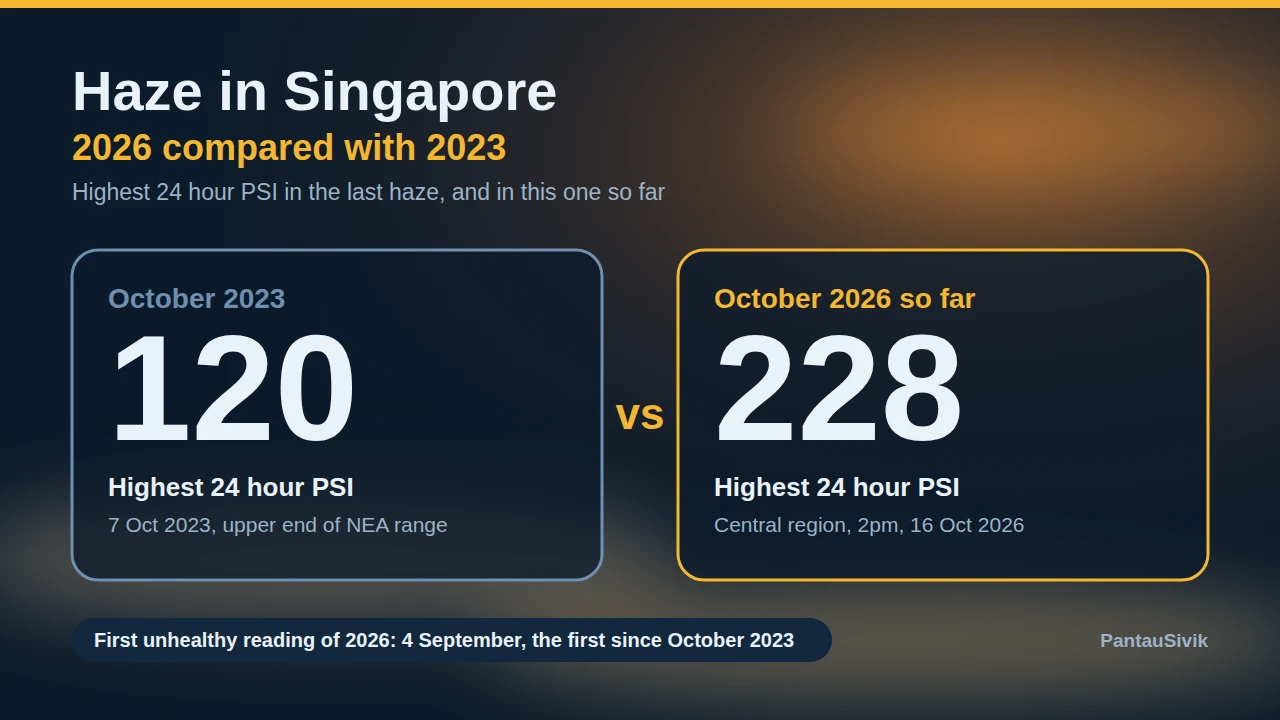
Haze is back in Singapore. The 24 hour PSI first entered the unhealthy range on 4 September, the first time since October 2023, and it has kept returning since. At 2pm on 16 October, the Central region reached 228, in the very unhealthy band (201 to 300). A day earlier, the West region had reached 212. NEA has linked the haze to fires in Kalimantan and southern Sumatra.
At a glance: the highest 24 hour PSI we found for the 2023 haze was 120. This year it has reached 228, the highest reading in the data we hold for 2026. The 1 hour PM2.5 reading has gone from 94 to 182 µg/m³ over the same comparison.
How the 2026 haze built up
The readings did not jump in one day. They stepped up over six weeks: 101 on 4 September, 154 on 15 September when all five regions were unhealthy, 167 on 29 September, 186 on 9 October, 212 on 15 October and 228 today.
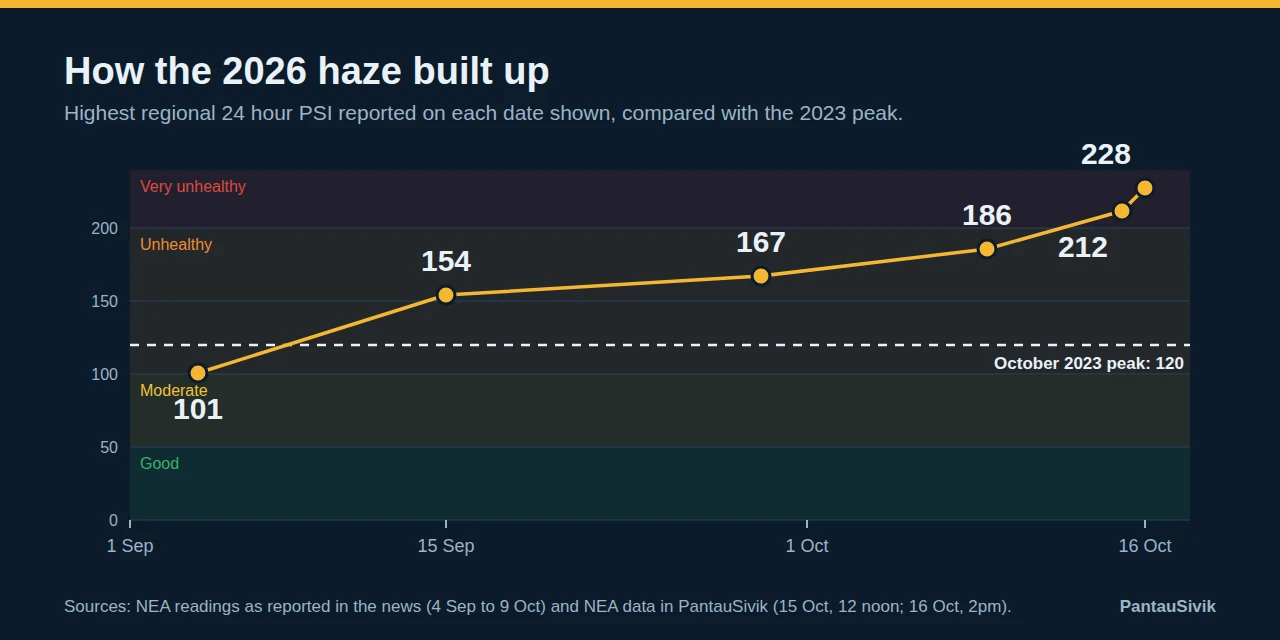
The first four points come from NEA readings reported in the news. The last two come from NEA data in PantauSivik: 12 noon on 15 October and 2pm on 16 October.
The last haze: October 2023
On 7 October 2023, NEA's 5pm update showed a 24 hour PSI of 66 to 120 and a 1 hour PM2.5 of 30 to 94 µg/m³. It was the first unhealthy air in Singapore since 2019. By 10 October the 24 hour PSI was back in the moderate range, at 59 to 86.
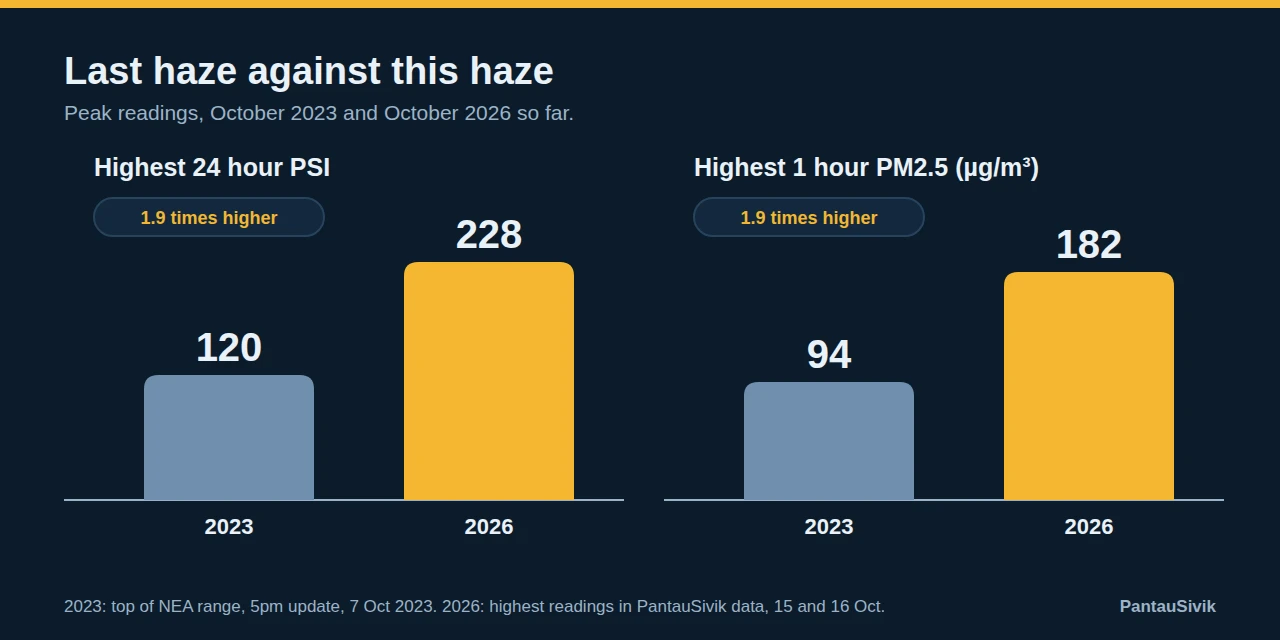
This year's peaks are about 1.9 times the PSI and 1.9 times the 1 hour PM2.5 of the 2023 figures. The 2023 numbers are the highest we found, so the real 2023 peak could have been a little higher.
Right now, by region
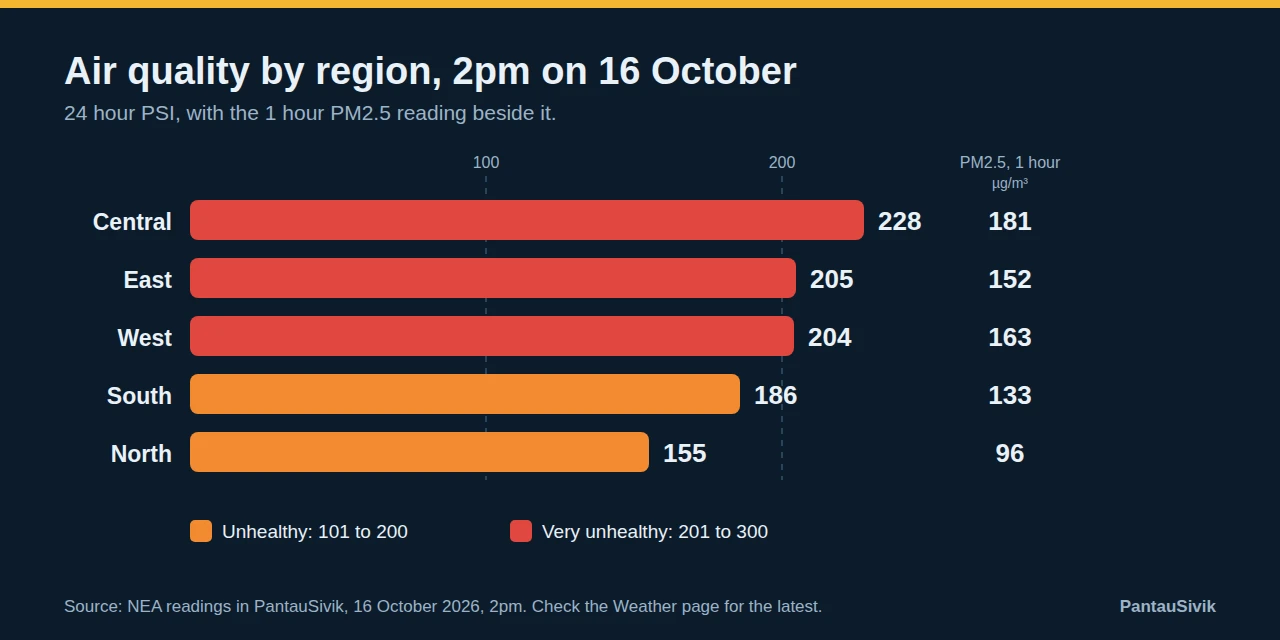
At 2pm on 16 October, every region was in the unhealthy range or worse. Central, East and West were in the very unhealthy band, and the 1 hour PM2.5 ranged from 96 to 181 µg/m³. Under NEA's 1 hour PM2.5 bands, Central, East and West were in the High band (151 to 250) and South and North in the Elevated band (56 to 150).
What PantauSivik recorded each day
From 25 September to 16 October, the highest regional 24 hour PSI at the last reading of the day was above 100 on 14 of 22 days, and on every day since 6 October. The 16 October figure is the 2pm reading, because the day is not over.
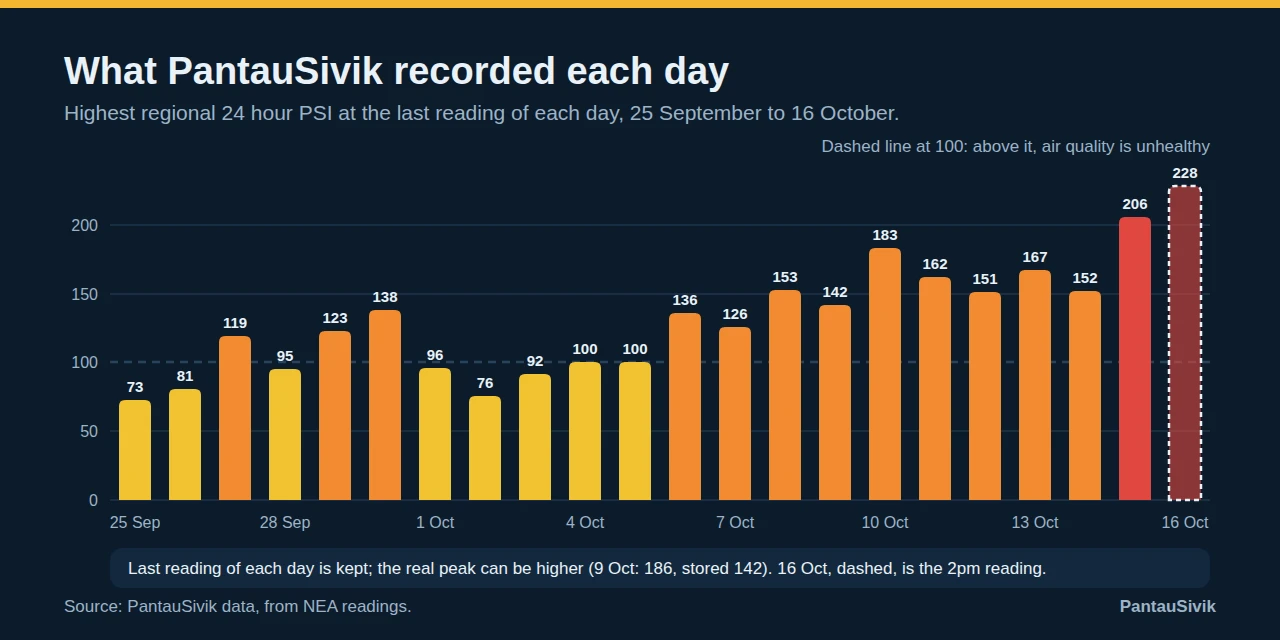
One caution: we keep only the last reading of each day, so the real daily peak can be higher. On 9 October the peak was 186, while the stored value for that day is 142.
Check haze in PantauSivik
You can see the same numbers for your part of Singapore in a few taps, and switch on an alert so you do not have to keep checking.
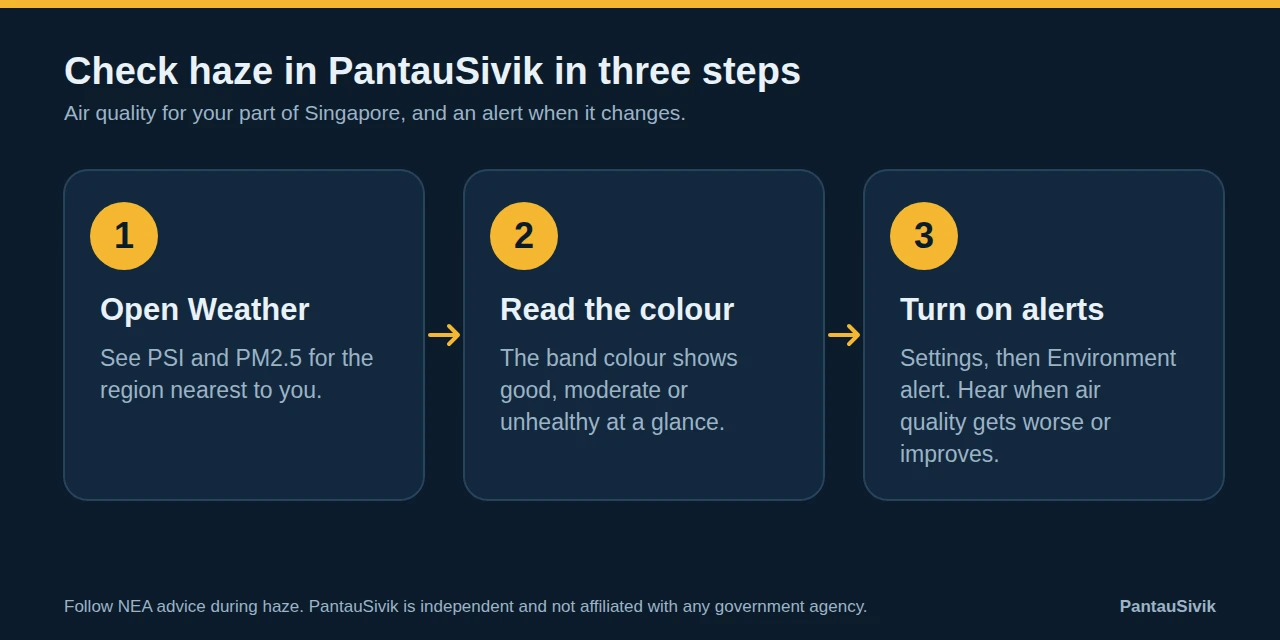
- Open the Weather page to see PSI and PM2.5 for the region nearest you.
- Read the band colour for a quick answer.
- Open Settings and switch on the Environment alert. You will hear when air quality gets worse or improves.
Read more: How to read weather, PSI, UV and heat stress in Singapore our earlier post, Haze, heat and UV: how to check the air and sun before you go out, and Does rain clear the haze?
Common questions
What does a PSI of 228 mean?
In NEA's bands, 201 to 300 is very unhealthy. NEA publishes health advice for each band, so follow it, and take extra care if you are older, pregnant, a young child or have a heart or lung condition.
What is the difference between PSI and PM2.5?
PSI is a 24 hour index that combines several pollutants. PM2.5 is the fine particle reading, and it is shown as a 1 hour value, so it reacts faster to changes. NEA groups 1 hour PM2.5 into Normal (up to 55), Elevated (56 to 150), High (151 to 250) and Very High (251 and above). The Weather page shows both.
How often do the readings update?
Hourly. The numbers in this article are from 2pm on 16 October, so open the Weather page for the latest.
Sources: NEA haze situation updates for 7 October 2023 and 10 October 2023; 2026 readings as reported by Malay Mail and The Star (29 September and 9 October); NEA data in PantauSivik.
Air quality information comes from public National Environment Agency sources and is there to help you plan. For health advice, follow guidance from the relevant authorities. PantauSivik is independent and not affiliated with any government agency.
See also: Public Alerts guide.
Spotted a mistake? Report an error on this page.