Home / Blog / Environment
Lightning in Singapore on 6 November: 66,503 strikes, our biggest day yet
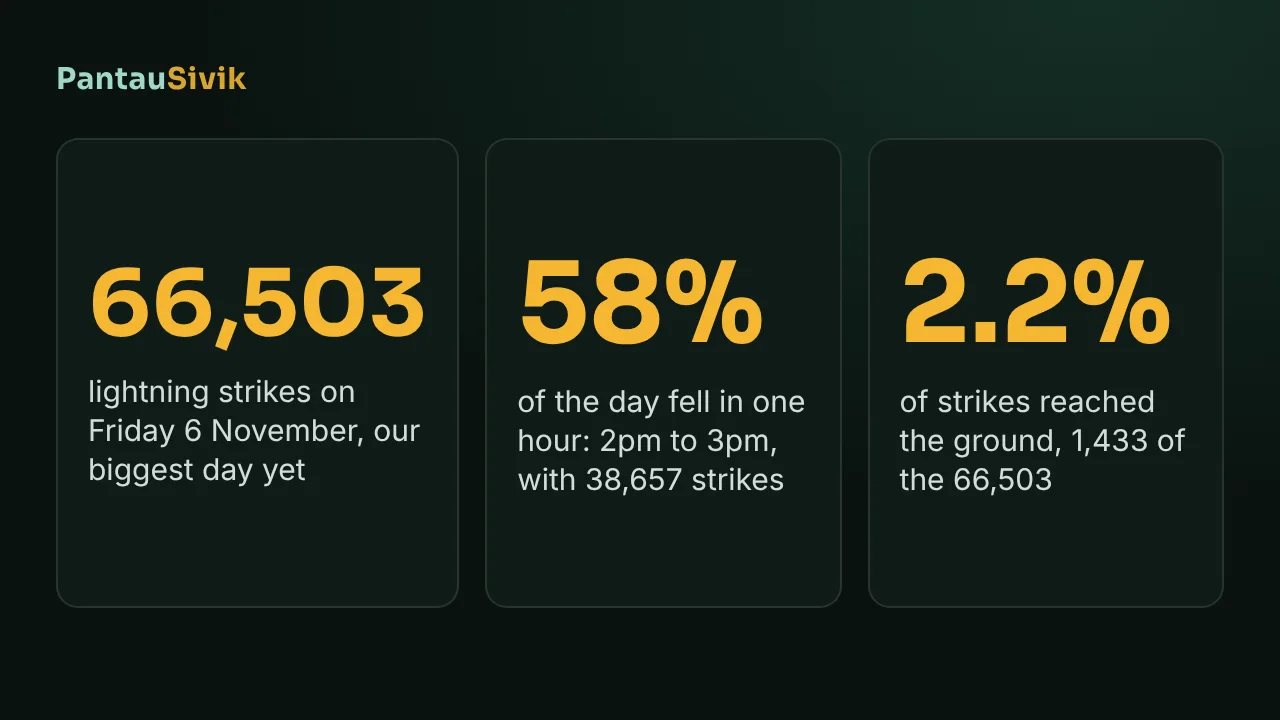
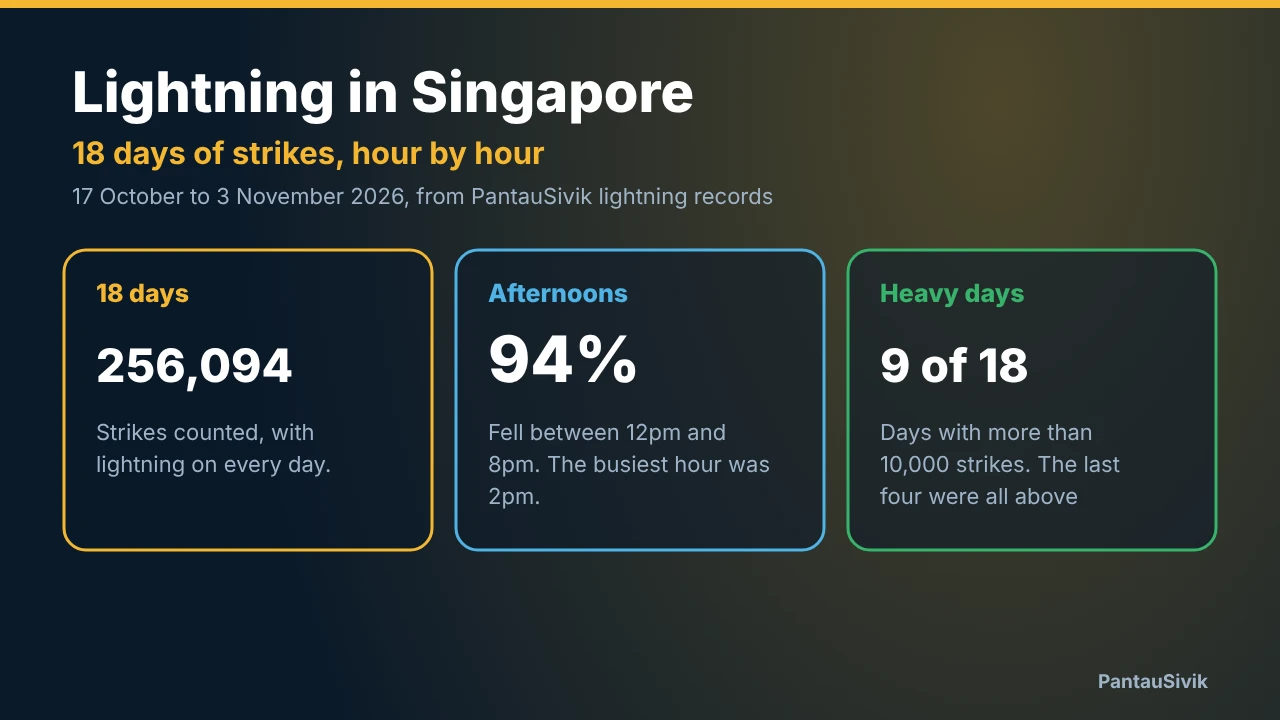
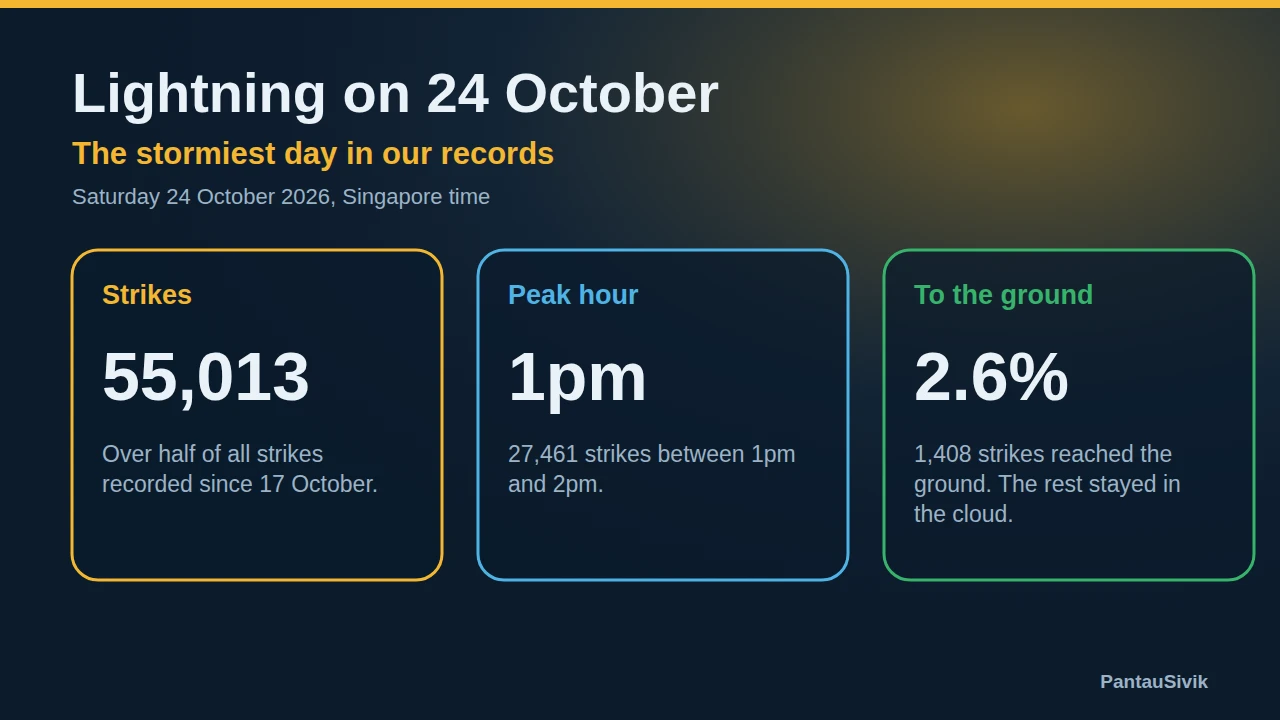
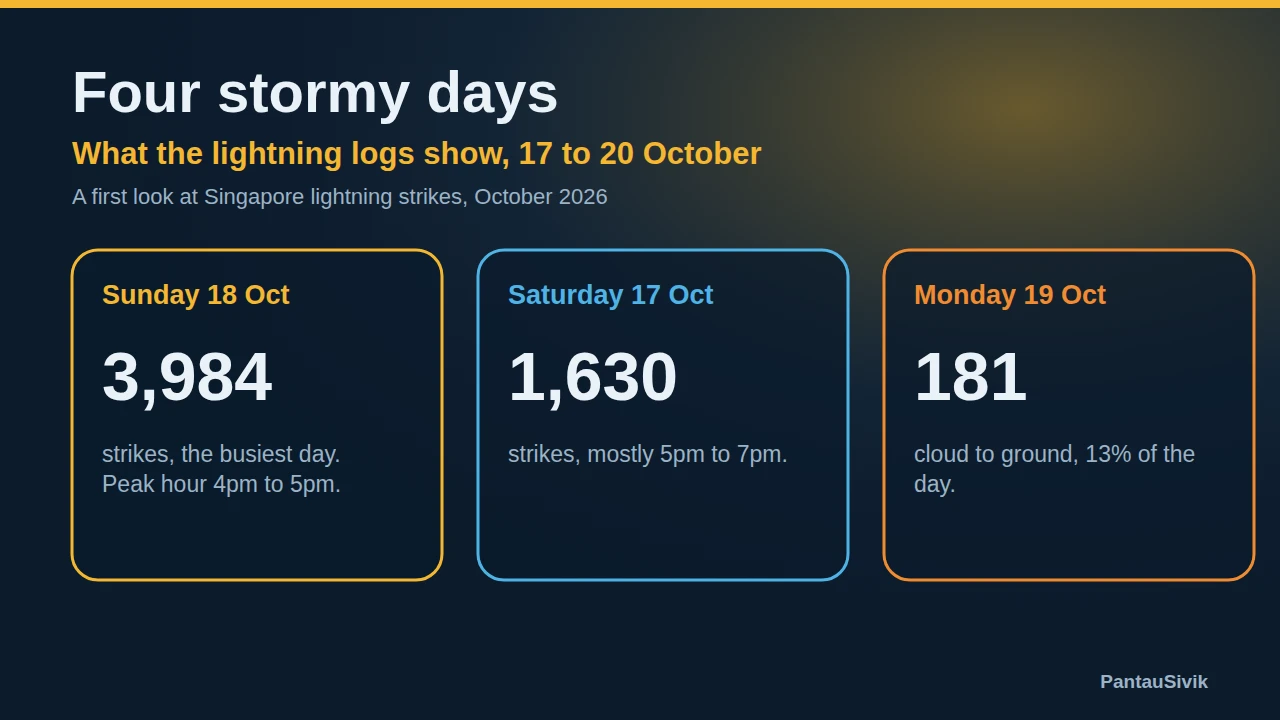
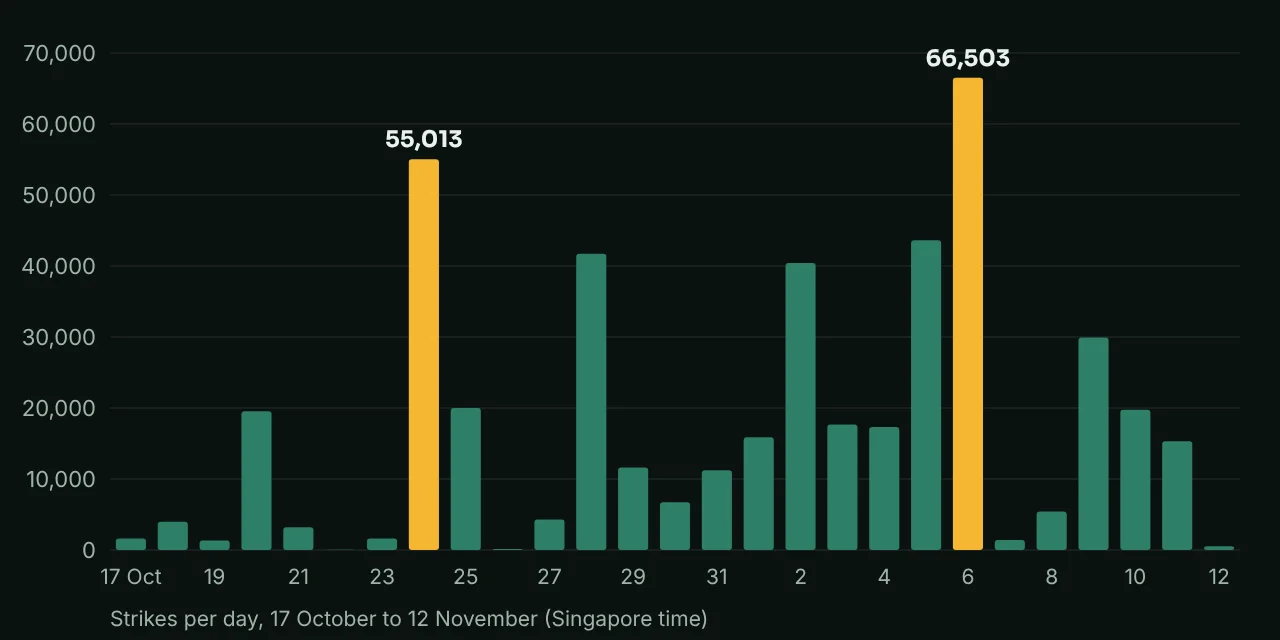
Friday 6 November 2026 was the heaviest lightning day in the hourly records PantauSivik has kept since 17 October: 66,503 strikes, about 21% more than the old record of 55,013 on Saturday 24 October. Our earlier posts looked at that 24 October storm and at 18 days of afternoon storms. This one asks what made 6 November different, and whether a record day shows up on the roads.
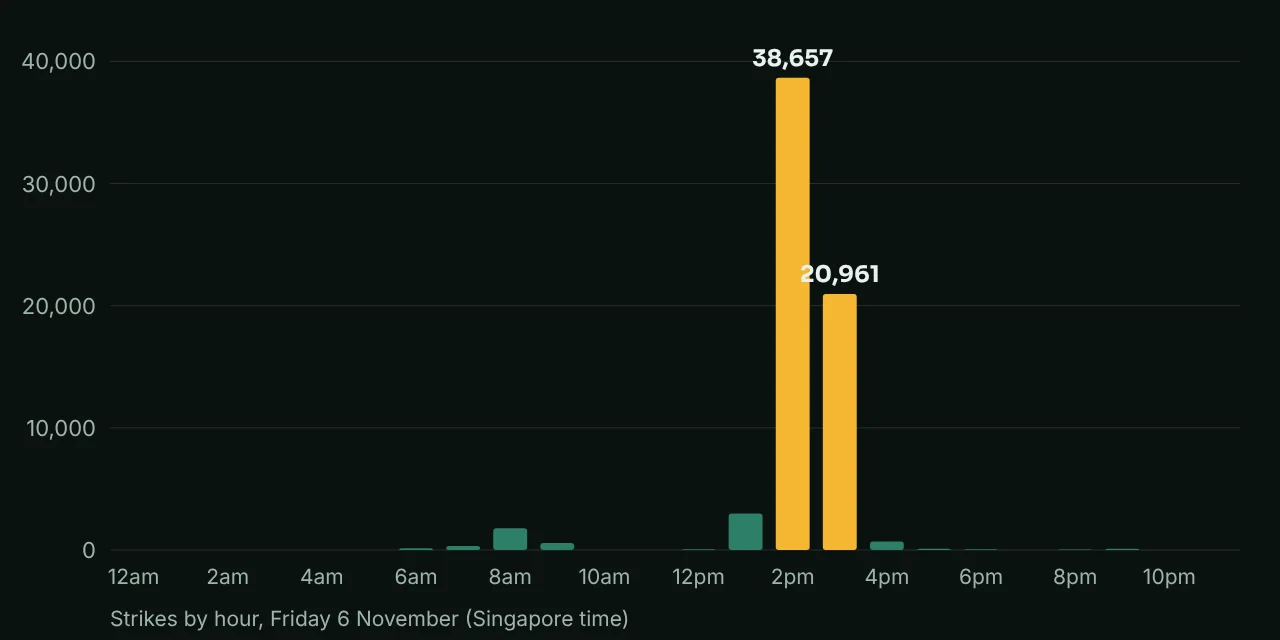
In short: 66,503 strikes in one day, and 58% of them, 38,657, fell in the single hour from 2pm, the busiest hour in our records. The two hours from 2pm held about 90% of the day. Only 1,433 strikes, 2.2%, were cloud to ground. The day before, Thursday 5 November, was also big at 43,631, and the day after was almost quiet at 1,407.
A record, with a clear margin
Five days have passed 40,000 strikes so far. 6 November leads them by more than 11,000.
- Friday 6 November: 66,503
- Saturday 24 October: 55,013
- Thursday 5 November: 43,631
- Wednesday 28 October: 41,727
- Monday 2 November: 40,421
Counting from Saturday 17 October to Thursday 12 November, we have 455,860 strikes in 27 days, with lightning on every day. 15 of those days passed 10,000. 5 and 6 November together had 110,134 strikes, about 24% of the whole period.
One hour did most of the work
The day was quiet until lunchtime. Before noon we counted only 2,827 strikes, about 4%, though a short burst at 8am had 1,772 of them. Then at 1pm the count rose to 2,978, and from 2pm it jumped. The hour from 2pm had 38,657 strikes and the hour from 3pm had 20,961. Together that is 59,618, about 90% of the day. By 4pm it was down to 704.
The 2pm hour is the busiest single hour in our records. The old holder was the 1pm hour on 24 October with 27,461, and next came the 2pm hour on 2 November with 26,181.
How many reached the ground
Of the 66,503 strikes, 65,070 were cloud to cloud, which stay in the sky, and 1,433 were cloud to ground, about 2.2%. That is close to the share on our other big days, which was 2.0 to 2.6%. A record count did not mean a record share reaching the ground.
Where the strikes were counted
We match a strike to one of the 47 NEA sectors when it is within 8 km of it. On 6 November 21,179 strikes, about 32%, belonged to no sector, which is less than the 51% across the earlier 18 days. Of the rest, Lim Chu Kang had the most with 6,679 strikes, about 10%, followed by the Western Water Catchment (4,141), Sungei Kadut (2,820), Seletar (2,300) and Tengah (1,902). In our earlier posts the Western Water Catchment led, so this time the strikes shifted towards Lim Chu Kang in the north west. These counts do not say exactly where a strike landed.
Did it show up on the roads?
Only partly. On Thursday 5 November the PIE at 6pm took about 74 minutes on average, the slowest weekday evening in our records, and the day had 43,631 strikes. On Friday 6 November it took about 66 minutes. Both are well above the weekday 6pm average of about 58 minutes.
But lightning does not predict it. On Monday 9 November there were 29,921 strikes and the PIE took about 43 minutes at 6pm, the quickest weekday evening we have complete data for. On Tuesday 10 November, with 19,737 strikes, it took about 70. Rain, incidents, roadworks and ordinary Friday traffic all play a part, and we did not look at any of them. See our post on expressway travel times by hour.
What it means for you
- Plan around the afternoon. On 6 November the hours from 2pm held about 90% of the strikes, and the same window led on our other big days.
- Mornings are not always calm. Friday had a short burst at 8am. Most of our mornings are quiet, but not all of them.
- Do not judge from the daily total. The next day, Saturday 7 November, had only 1,407 strikes. One heavy day does not say anything about tomorrow.
- Choose your sectors. Pick up to 4 sectors under My sectors so lightning alerts name the places you care about. See the Public Alerts guide and how to set up sector alerts.
- If you can hear thunder, move indoors, and follow official advice.
What this does not tell us
- It is 27 days of one period, so it does not show what is normal for Singapore or for the time of year.
- The counts are our own, by the hour, and may not match other lightning records.
- Our records for Saturday 17 October start in the afternoon, so that day may be incomplete.
- Sector areas are 8 km matches, not exact locations.
- We did not look at rainfall, official warnings or what caused the storm. A lightning count and a rain warning measure different things.
- Expressway times are the Land Transport Authority estimates for the monitored stretches, not timed trips.
Common questions
How many lightning strikes were there in Singapore on 6 November 2026?
PantauSivik recorded 66,503 lightning strikes on Friday 6 November 2026, the most of any day since our hourly records began on 17 October. The previous record was 55,013 on 24 October. These are our own counts, not an official total.
What time did the 6 November lightning happen?
Mostly between 2pm and 4pm. The hour from 2pm had 38,657 strikes, about 58% of the day, and the hour from 3pm had 20,961. Before noon there were only 2,827, with a short burst of 1,772 at 8am.
How many of the 6 November strikes reached the ground?
1,433 of the 66,503, about 2.2%. The other 65,070 were cloud to cloud and stayed in the sky.
Where in Singapore was the lightning on 6 November?
About 32% of the strikes were not within 8 km of any of the 47 NEA sectors we use. Of the rest, Lim Chu Kang had the most with 6,679 strikes, then the Western Water Catchment with 4,141 and Sungei Kadut with 2,820. The counts do not say exactly where a strike landed.
Does a big lightning day mean slower traffic on the PIE?
Not reliably. The PIE took about 74 minutes at 6pm on 5 November and 66 on 6 November, but about 43 on 9 November, a day with 29,921 strikes. We did not check rain or incidents, so the link is not proven.
Sources: PantauSivik's own lightning records, 17 October to 12 November 2026, in Singapore time. Strike counts are by the hour, with a strike matched to one of the 47 NEA sectors when it is within 8 km. Expressway times use Land Transport Authority estimates. Charts are also on the History lightning page.
Information in PantauSivik comes from public sources and is there to help you plan. In an emergency, follow official channels. PantauSivik is independent and not affiliated with any government agency.
See also: Lightning on 24 October, Lightning in Singapore, 17 October to 3 November, Four stormy days: our first lightning records, Expressway travel times by hour, History: lightning, Public Alerts guide.