Home / Blog / Environment
Northeast monsoon in Singapore, December to March: what to expect, and what our storm data shows so far
The northeast monsoon starts in December. The Meteorological Service Singapore (MSS) puts the season from December to early March, with a wetter first half and a drier, windier second half. This post sums up what MSS and PUB say about it, then sets that beside our own storm records. We should be upfront about one thing: our records began on 18 October, so they cover the inter monsoon weeks, not a monsoon. We will compare them with December when we have it.
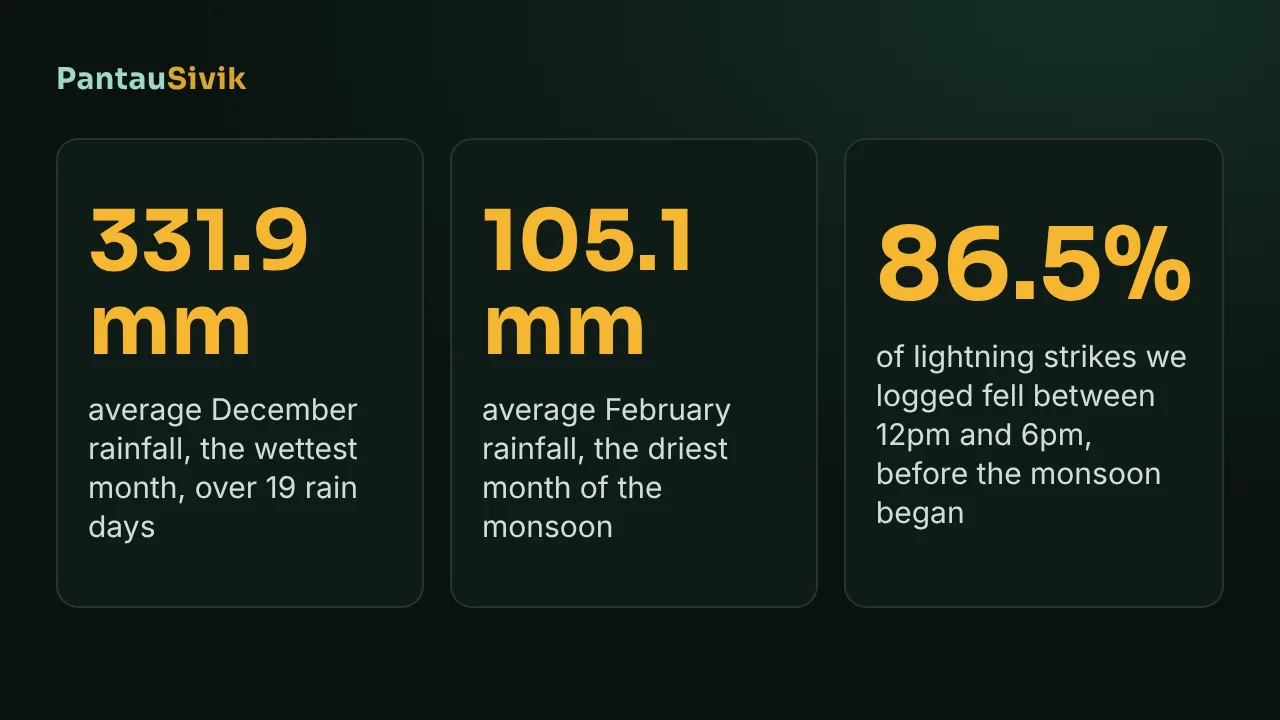
In short: on average December is Singapore's wettest month, with 331.9 mm of rain over 19 rain days, and February is the driest, with 105.1 mm over 9 (MSS means for 1991 to 2020). The wet phase can bring widespread, continuous rain for days on end, plus quick afternoon showers. In our records so far, 86.5% of lightning strikes came between 12pm and 6pm. PUB's advice for floods is to turn back, and not to drive into flooded roads.
Two phases, one season
MSS describes the northeast monsoon as having two parts. In the wet phase, from December to early January, monsoon surges bring widespread, continuous moderate to heavy rain, sometimes with winds of 25 to 35 km/h. Showers can also form quickly in the afternoon and early evening. In the dry phase, from late January to early March, it is windy but relatively dry.
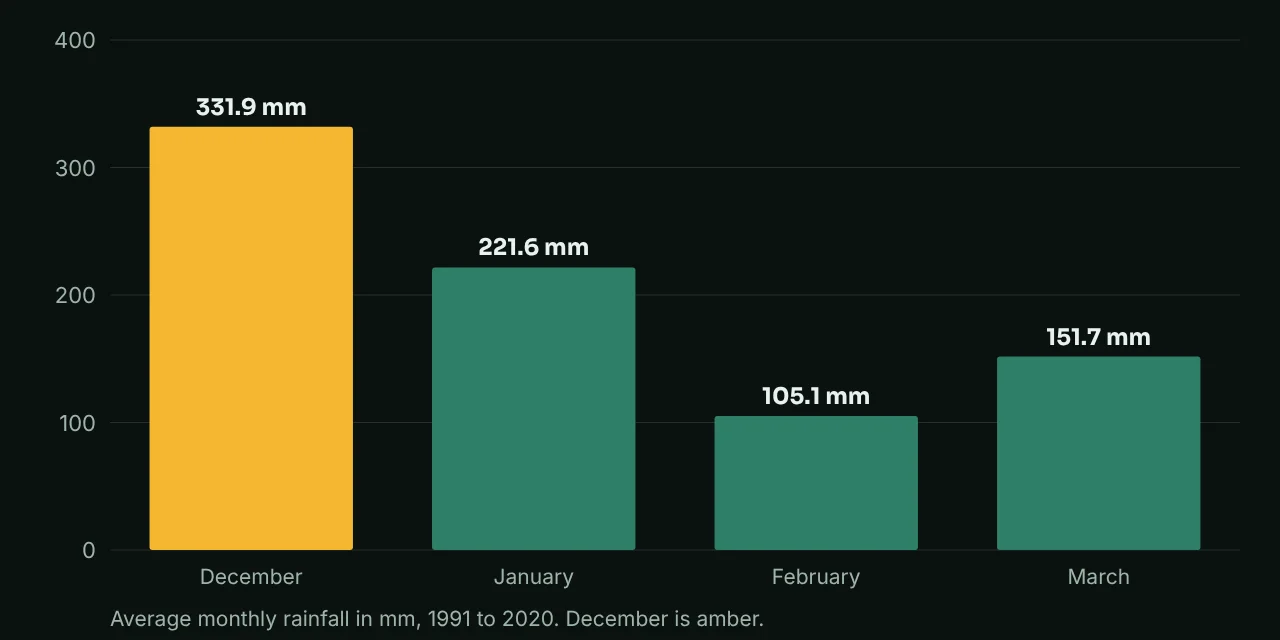
- December: 331.9 mm over 19 rain days, with 14 thunderstorm days on average.
- January: 221.6 mm over 13 rain days, with 6 thunderstorm days.
- February: 105.1 mm over 9 rain days, with 5 thunderstorm days.
- March: 151.7 mm over 12 rain days, with 12 thunderstorm days.
Temperatures hardly change through the season. December and January have average highs of about 30.5 to 30.6°C and lows of about 24.3°C, and the 24 hour mean of 26.8°C is the coolest of the year. Winds are strongest in this monsoon, with monthly averages of 2.6 m/s in January and 2.8 m/s in February, and 10 m/s or more during surges. These are long term averages, so any one year can be wetter or drier.
What a surge is
MSS calls monsoon surges strong wind episodes that drive the major rainfall events. In its advisory of 30 November 2018, NEA said to expect two to four surges of northeasterly winds in that season, each lasting two to five days, with cooler temperatures and sometimes widespread rain. The number differs from year to year, so treat that as an example of the pattern, not a forecast for this season.
Flash floods: what PUB advises
PUB says that heavy rain at high tide can cause local flash floods, especially in low lying areas. It sends advisories to some homes and shophouses in those areas. Its public advice includes:
- Join the Gov.sg PUB Flood Alerts Telegram channel for rainfall and flood updates, or use the myENV app.
- If you meet floodwater, turn back and move to higher ground, and stay there until it recedes.
- Do not wade through moving water, and do not drive into flooded roads. About 30 cm of water can stall a car, and about 60 cm can wash away most vehicles.
- Do not touch electrical equipment if you are wet or standing in water.
What our storm data shows so far
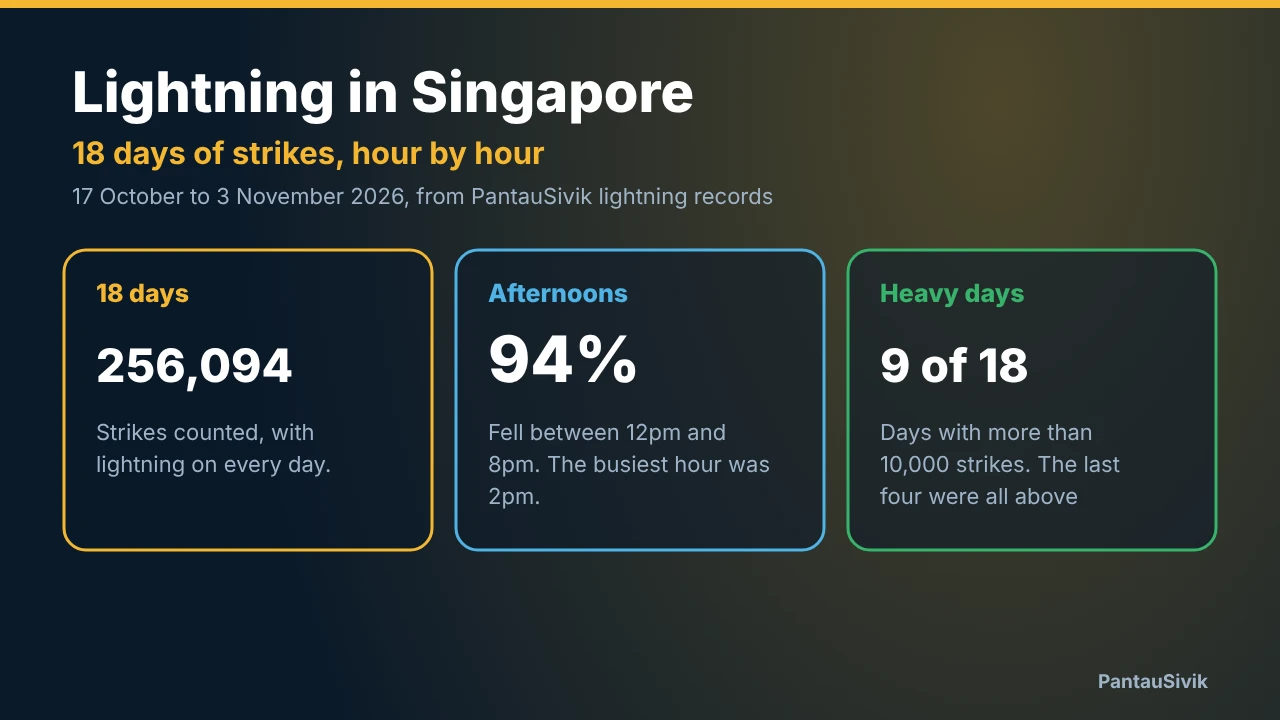
From 18 October to 13 November we logged 443,897 lightning strikes near Singapore. MSS describes October and November as an inter monsoon period, with light and variable winds and thunderstorms in the afternoon and early evening, sometimes severe. Our records fit that. Between 12pm and 6pm there were 86.5% of all strikes, and 2pm alone held 32.4%. Only 2.1% fell between 11pm and 6am.
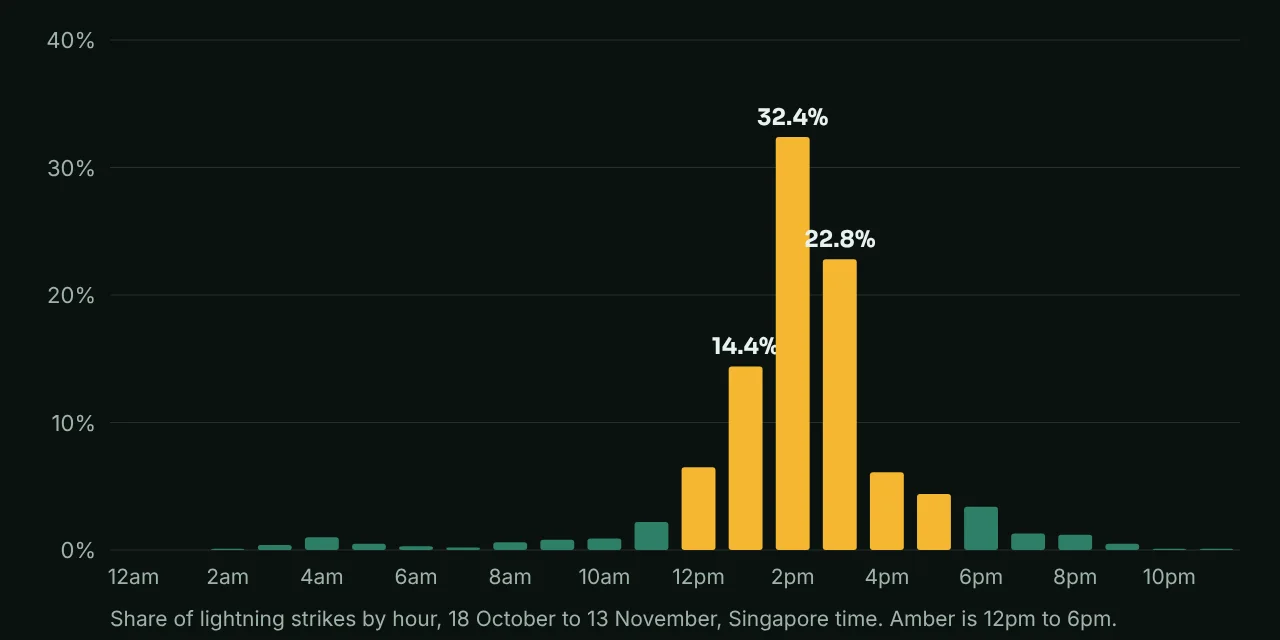
One caution: a few huge days shape this chart. Friday 6 November alone had 66,503 strikes, and 38,657 of them in the hour from 2pm. Without that day the share between 12pm and 6pm is 84.9%, so the pattern holds, but it is not an even spread over many days. We also logged 22 heavy rain alerts for Singapore, on 10 of the 26 days with data.
MSS says the wet phase also brings widespread, continuous rain, which is not tied to the afternoon. So we expect December to look different from this chart, and we will check once we have the month. The daily and hourly charts are on History: lightning.
What to check in PantauSivik
- The Weather page for rain and the latest readings near you. Our weather guide explains each one.
- The Environment alerts, which include heavy rain and lightning. The Public Alerts guide shows how to switch them on.
- For flood alerts, PUB's own channel and the myENV app are the official sources.
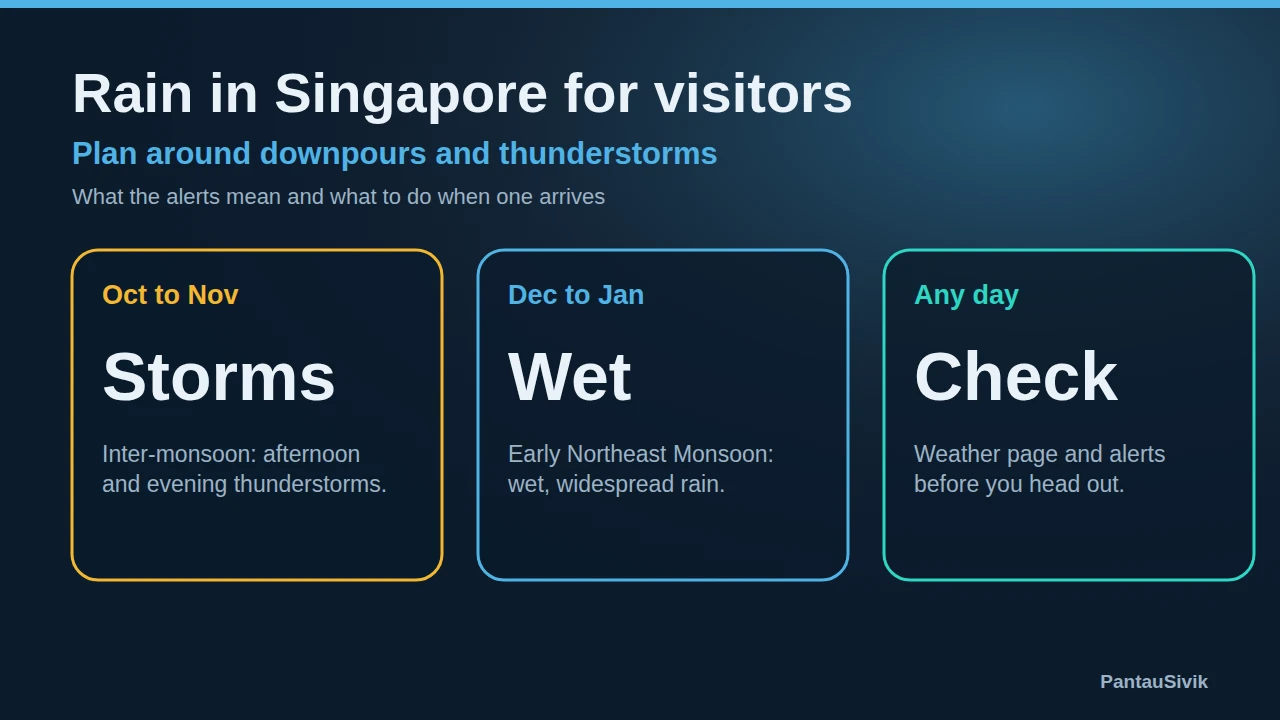
If you are visiting, our post on rain in Singapore for visitors covers how to plan around downpours.
What this does not tell you
- The rainfall figures are averages for 1991 to 2020. They are not a forecast for this December.
- Our lightning records cover four weeks of inter monsoon weather, so they do not show how storms behave in a monsoon.
- A strike count is not a rainfall or flood measure. Heavy rain can cause floods without lightning, and the other way round.
- Heavy rain alerts are notices we logged, and not a count of storms or floods.
Common questions
When is the northeast monsoon in Singapore?
The Meteorological Service Singapore puts it from December to early March, with a wetter first half (December to early January) and a drier, windier second half (late January to early March).
Which month is the wettest in Singapore?
December. MSS long term averages for 1991 to 2020 show 331.9 mm of rain over 19 rain days in December. February is the driest, with 105.1 mm over 9 rain days.
What is a monsoon surge?
MSS describes monsoon surges as strong wind episodes that drive major rainfall events. During a surge, average wind speeds can reach 10 m/s or more, with widespread, continuous rain.
How do I get flash flood alerts in Singapore?
PUB advises joining the Gov.sg PUB Flood Alerts Telegram channel for rainfall and flood updates, or using the myENV app.
How deep can floodwater be before it stops a car?
PUB says about 30 cm of water can stall a car, and about 60 cm can wash away most vehicles, including SUVs. Do not drive into flooded roads.
When do thunderstorms happen in PantauSivik records?
From 18 October to 13 November, 86.5% of the lightning strikes we logged fell between 12pm and 6pm Singapore time. That was inter monsoon weather, so December may look different.
Sources: Meteorological Service Singapore, Climate of Singapore (1991 to 2020 averages); NEA advisory of 30 November 2018; PUB public advisory. Lightning counts are PantauSivik's own records of public data, 18 October to 13 November 2026, in Singapore time.
Information in PantauSivik comes from public sources and is there to help you plan. In an emergency, follow official channels. PantauSivik is independent and not affiliated with any government agency.
See also: Rain in Singapore for visitors, History: lightning, Weather guide, Public Alerts guide.